Apify vs Bright Data: Cost per 1,000 Results on Five Data Types, with an EveryInfra Test
Apify vs Bright Data per 1,000 results for Google Maps, Amazon, TikTok and Instagram: which is cheaper flips by job and tier. Plus real per-call costs.

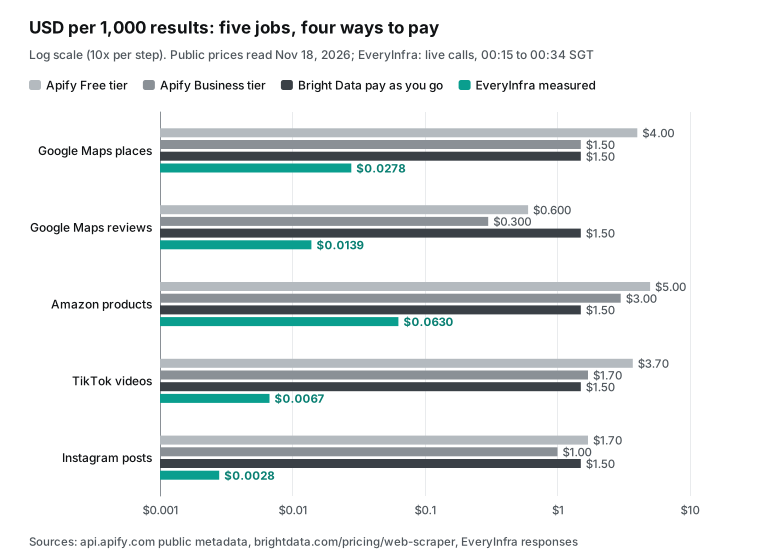
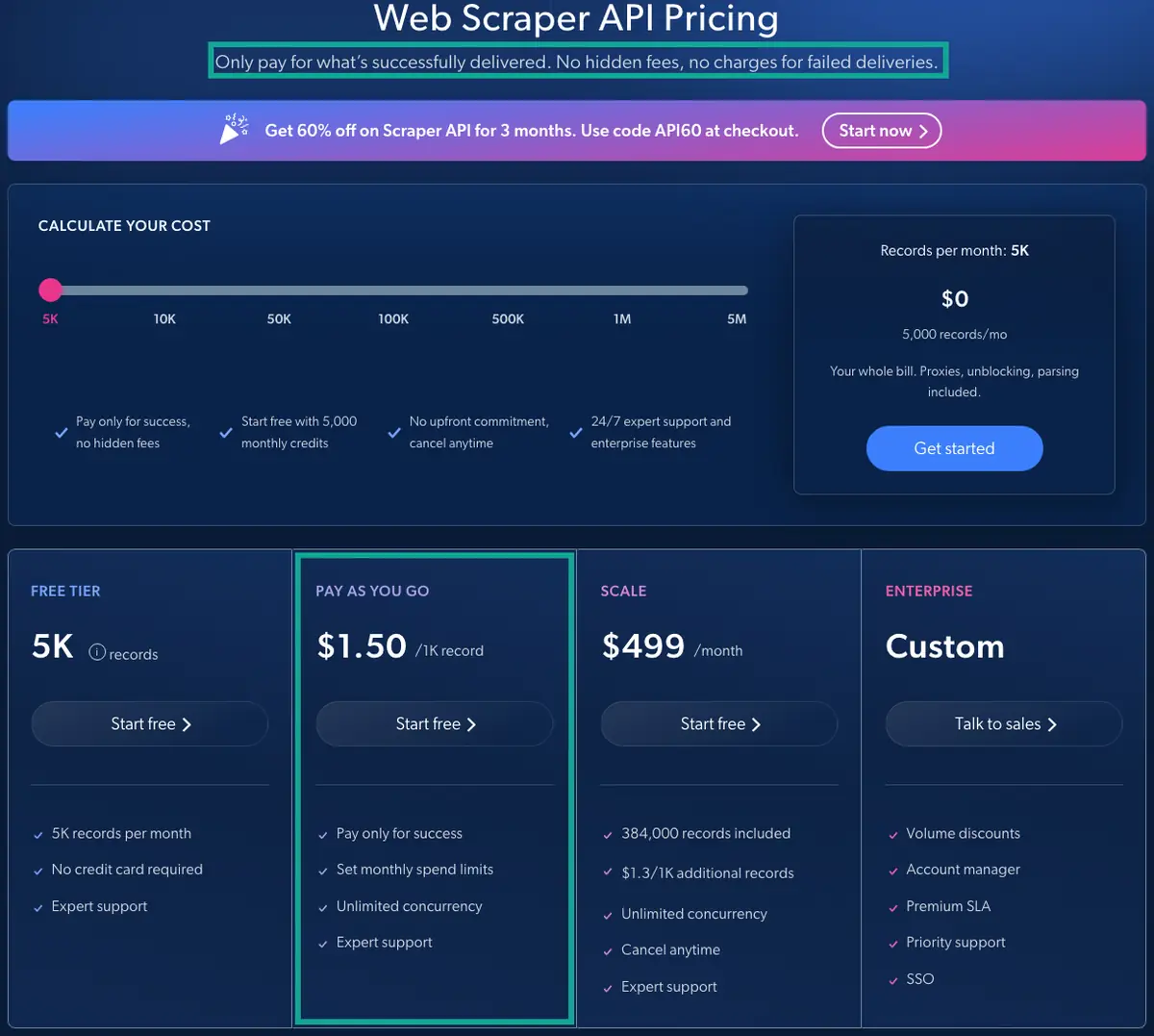
People ask "apify vs bright data, which one is cheaper". The honest answer is that it depends on the job and on your Apify plan. We read both public price lists on November 18, 2026. Bright Data's Web Scraper API charges one flat rate of $1.50 per 1,000 records on all four platforms. Apify Store actors set their own prices, and the Free plan costs 2.5 to 3.3 times Bright Data for places, Amazon and TikTok. Google Maps reviews go the other way, at $0.30 to $0.60 per 1,000 on Apify.
On the same night we made 9 real data calls on EveryInfra, which bills per request. We divided each charge by the rows that came back. Instagram posts came to $0.0028 per 1,000 and TikTok videos to $0.0067. Google Maps reviews came to $0.0139, places to $0.0278 and Amazon products to $0.063.
These numbers are not like for like. Ours are search-list rows from one request, with 20 fields per Amazon row. Theirs are full records, and a Bright Data Amazon record has 94 fields. Against the lower of Apify Free and Bright Data PAYG, our list rows cost 24 to 536 times less. Against Apify Business, the range is 21.6 to 357 times. For one-product detail calls, we charge $1.389 per 1,000, only 7% below Bright Data.
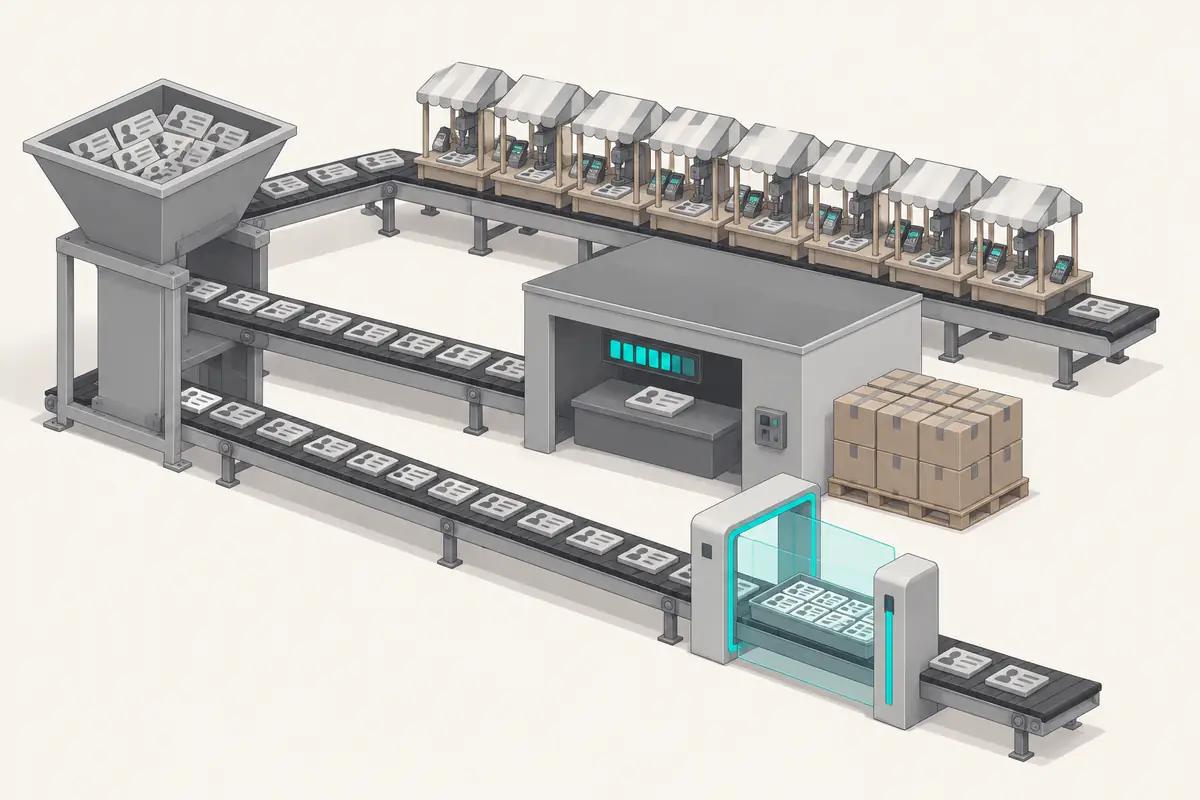
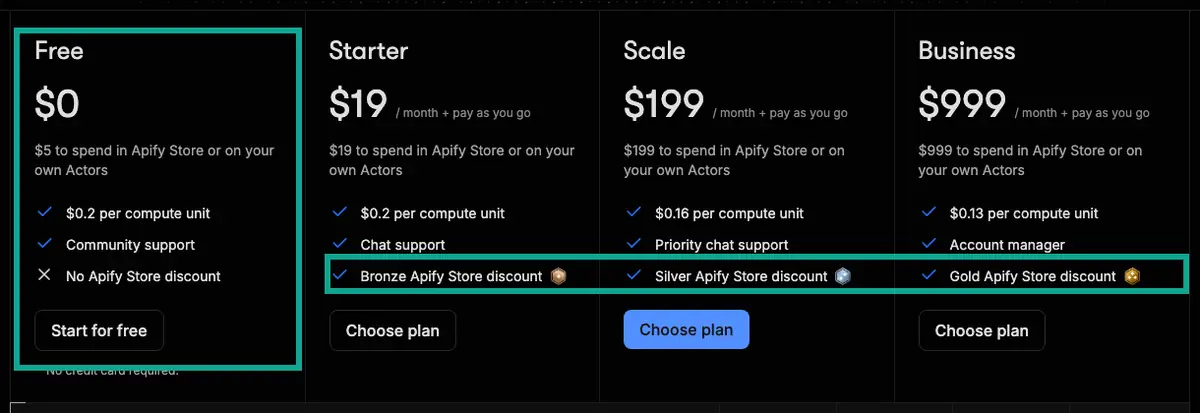
Before we compare, we must put both vendors on the same denominator. In the Apify Store, ready-made scrapers are called actors. Most of them use pay per event. The actor charges a fee each time it writes a result, and sometimes a small fee when it starts. The Apify docs on actors in Store name three discount tiers: Bronze, Silver and Gold. These match the Starter ($19), Scale ($199) and Business ($999) plans.
The Free plan gives $5 of usage per month and no discount (Apify pricing, read 2026-11-18). Bright Data's Web Scraper API charges for "successfully delivered" records. Pay-as-you-go is $1.50 per 1,000. The Scale plan is $499 per month with 384,000 records included and $1.30 per 1,000 after that (Web Scraper API pricing, read 2026-11-18).
EveryInfra charges per request. Each capability has one fixed price, so a call with 1 row costs the same as a call with 200. In this article, each price per 1,000 is "charge divided by rows returned, times 1,000". The denominator is the rows we got back, not the limit we asked for.
Apify vs Bright Data price table: five jobs, cost per 1,000 results
The Apify column uses the price in force at read time, from each actor's public metadata. The Get Actor endpoint needs no account. Its pricingInfos field lists every price version with a start date. The Bright Data column uses the PAYG rate from its pricing page, one price for all four platforms. The EveryInfra column is our real test on November 18, with calls and rows in brackets.
| Job | Apify actor (event) | Apify Free / Starter / Scale / Business | Bright Data PAYG / Scale overage | EveryInfra capability | EveryInfra measured (calls / rows) |
|---|---|---|---|---|---|
| Google Maps places | Google Maps Scraper (place-scraped) | 4.00 / 3.00 / 2.00 / 1.50 | 1.50 / 1.30 | google_maps_reviews/search | 0.0278 (2 / 100) |
| Google Maps reviews | Google Maps Reviews Scraper (review-scraped) | 0.60 / 0.45 / 0.40 / 0.30 | 1.50 / 1.30 | google_maps_reviews/reviews | 0.0139 (1 / 100) |
| Amazon products | Amazon Product Scraper (result) | 5.00 / 4.00 / 3.50 / 3.00 | 1.50 / 1.30 | amazon/search | 0.063 (2 / 71) |
| TikTok videos | TikTok Scraper (result) | 3.70 / 3.00 / 2.30 / 1.70 | 1.50 / 1.30 | tiktok/search, tiktok/hashtag | 0.0067 (3 / 249) |
| Instagram posts | Instagram Post Scraper (post) | 1.70 / 1.50 / 1.30 / 1.00 | 1.50 / 1.30 | instagram/user_posts | 0.0028 (1 / 200) |
All values are USD per 1,000 results. The Apify prices do not include add-on events. On the Free plan, each filter on the Google Maps Scraper adds $0.001 per place, or $1 per 1,000. The TikTok Scraper adds $0.001 for each actor start. The Amazon Product Scraper adds $0.0025 for each seller offer on the Free plan.
Bright Data has no add-on events. The top of its pricing page shows the code API60 for 60% off Scraper APIs for three months. That brings PAYG to $0.60. In those three months, Bright Data beats every Apify tier on four of the five jobs. Map reviews are the exception, because Apify Business is $0.30.
How we calculated: read time, tier mapping and the denominator
Each Apify actor has its own price, and many actors have changed price several times. At 00:20 SGT on November 18, 2026, we read the metadata of seven actors through the public API. For each one we kept the last price version that started before the read time. We also checked for future price versions, and none of the seven had one.
All seven actors show a modifiedAt of November 16 or November 17. Their code changes often, so read the price again before you buy. The tier mapping comes from the Apify pricing page. Free has no Store discount, Starter is Bronze, Scale is Silver and Business is Gold. The metadata also lists Platinum and Diamond tiers for enterprise contracts, which we do not use here.
| Apify plan | Monthly fee (USD) | Usage included | Store discount tier | Compute unit price (per CU) | Max concurrent runs |
|---|---|---|---|---|---|
| Free | 0 | $5 | none | 0.2 | 5 |
| Starter | 19 | $19 | Bronze | 0.2 | 32 |
| Scale | 199 | $199 | Silver | 0.16 | 128 |
| Business | 999 | $999 | Gold | 0.13 | 256 |
The Apify pricing page says prepaid plan usage expires at the end of the billing cycle. It does not roll over. On the Free plan, the account stops for the month when the $5 is gone. On paid plans, extra usage goes onto the next invoice. So the monthly Apify cost is the larger of the plan fee and "results times tier price".
The Bright Data free tier docs give new accounts 5,000 credits per month. One Web Scraper API record uses one credit, and no card is needed. The credits reset on the first day of each month without rollover. A PAYG account is a prepaid wallet with no monthly fee. EveryInfra charges the catalog price_usd per call. Top-up balance does not expire, and failed or empty results are free (pricing).
On our side, the row count is the real length of the results array. For a job with more than one call, we added charges and rows first, then divided. We used billing.charged_usd from each response, not the balance, because others shared the test key. We sent the 16 requests at three moments, 00:15, 00:24 and 00:31 SGT, with no parallel calls. One script calculates every number and chart from the raw responses.
One more point. The Apify and Bright Data columns come only from public price lists and actor metadata. We did not open accounts and run jobs on either vendor. So "tested" in this article means the EveryInfra side only. To see real row counts, field coverage and failure rates on the other two, use their free allowances. Apify's $5 a month at Free prices covers 1,250 places or 8,333 reviews. Bright Data's 5,000 monthly records cover a thousand rows on each of the five jobs. Record three things: rows delivered, the amount charged, and whether failures or empty results cost money. Also record field counts, because a full record and a search-list row have different uses.
Job 1: Google Maps places, where Bright Data PAYG equals Apify Business
At 00:15 SGT on November 18, 2026, we called google_maps_reviews/search for coffee shops in Austin, TX, with limit 50. It returned 50 places in 9.5 seconds and charged $0.001389. The response had a next_page_token. At 00:31 SGT we sent that token back in async mode for page 2. We had a job ID in 1.9 seconds, and the job returned 50 more places for another $0.001389.
Across the two pages, 6 places appeared twice, so there were 94 unique places. At 100 rows the cost is $0.0278 per 1,000. At 94 unique places it is $0.0296. All 100 rows had a place ID, coordinates, postal code and category.
95 rows had a website, 77 had a phone number and 37 had a short description. None had a price level. The median rating was 4.7, and the median review count was 412.
curl -s https://api.everyinfra.com/api/v1/social \
  -H "Authorization: Bearer $EVERYINFRA_API_KEY" \
  -H "Content-Type: application/json" \
  -d '{"platform":"google_maps_reviews","action":"search",
       "params":{"keyword":"coffee shop","location":"Austin, TX","limit":50}}'
# Page 2: send next_page_token back as page_token, add "mode":"async", then poll poll_url
The Apify Google Maps Scraper is one of the most used actors in the Store. Its metadata shows 701,487 users. It moved to pay per event in 2025. The help center note gave a base price of $4 per 1,000 places. The current tier prices are Free $4.00, Starter $3.00, Scale $2.00 and Business $1.50.
Bright Data's Google Maps full information scraper charges $1.50 per record. Its Google scraper docs say that discovery by keyword or area always runs async. A sync request that waits a full minute turns into an async job.
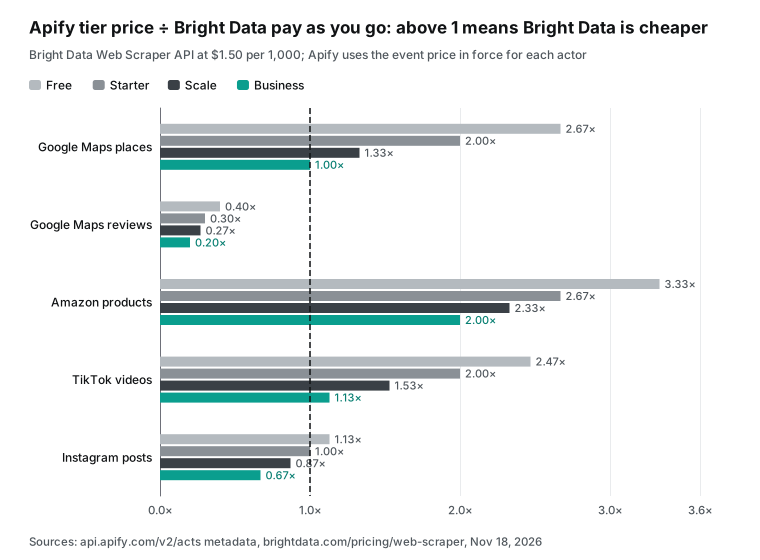
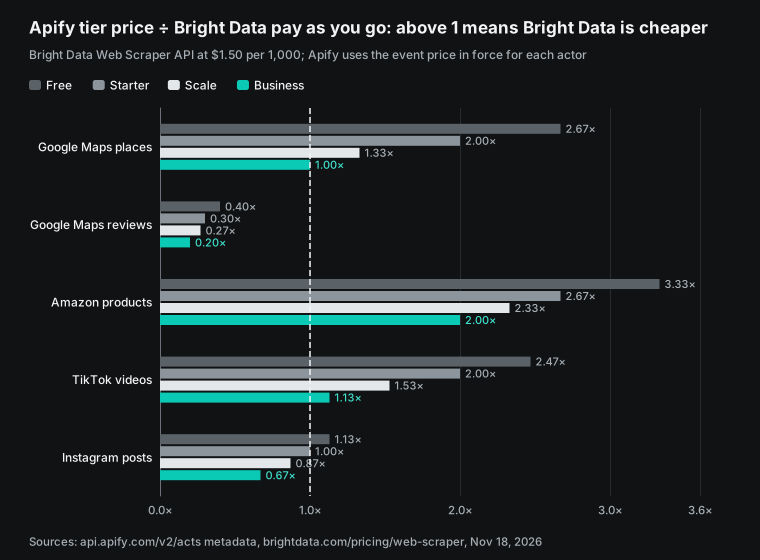
Side by side, Apify Free costs 2.67 times Bright Data PAYG. Starter costs 2 times, Scale 1.33 times and Business exactly 1 time. Against our $0.0278, Bright Data PAYG is 54 times higher and Apify Free 144 times higher. There is one limit to keep in mind. We return at most 50 rows per page and 120 rows per search term (the catalog max_rows).
For every coffee shop in a city, you split the job into several keywords and districts. The Apify and Bright Data place scrapers can sweep a whole map area in one job. Count the work of splitting terms in your own cost.
Add-on events: the same 1,000 places can cost twice as much on Apify
The Google Maps Scraper price list has ten add-on events besides the base event. The current version started on June 30, 2026. The table shows a common combination per 1,000 places: one filter, extra place details and company contacts.
| Apify plan | Base place | + 1 filter | + details | + contacts | Total per 1,000 | Lead add-ons (each, per 1,000) |
|---|---|---|---|---|---|---|
| Free | 4.00 | 1.00 | 2.00 | 2.00 | 9.00 | 100 |
| Starter | 3.00 | 1.00 | 2.00 | 2.00 | 8.00 | 4 to 8 |
| Scale | 2.00 | 0.75 | 1.50 | 1.50 | 5.75 | 3 to 7 |
| Business | 1.50 | 0.525 | 1.05 | 1.05 | 4.125 | 2 to 6 |
The base price is only about half of the bill. The three lead add-ons cost $0.10 each on the Free plan. A free account that turns them on uses its $5 after 50 items. The same actor can also collect reviews at $0.0005 each and images at $0.0005 each on Free. That is a little cheaper than the dedicated reviews actor on Free.
Bright Data's Google Maps record has no add-ons. One record at $1.50 holds every field it defines. Our place search includes website, phone and description when the place has them, at no extra charge. Reviews are a separate call at a separate per-call price. When you compare against Apify, price the add-ons you will actually use.
Job 2: Google Maps reviews, the one job where Apify beats Bright Data
At 00:24 SGT we called google_maps_reviews/reviews for Epoch Coffee, which has 2,542 reviews. With limit 100, it returned 100 reviews in 7.9 seconds and charged $0.001389. That is $0.0139 per 1,000.
Of the 100 reviews, 70 had 5 stars and 10 had 1 star. 65 had text, 69 authors were Local Guides and 15 reviews had photos. None had an owner reply. The dates ran from June 27, 2023 to November 16, 2026.
Apify has a dedicated Google Maps Reviews Scraper that charges per review. The prices are Free $0.60, Starter $0.45, Scale $0.40 and Business $0.30 per 1,000. Each actor start adds $0.00005. Its metadata shows 12,035,686 runs in total, more than three times the place scraper. Its 30-day success rate is 99.71%.
Bright Data's Google Maps reviews scraper has the same $1.50 price as its other scrapers. So for reviews, all four Apify tiers are cheaper than Bright Data: 0.40, 0.30, 0.27 and 0.20 times. With the API60 code, Bright Data's $0.60 only matches Apify Free.
Our $0.0139 is 21.6 times below Apify Business and 43 times below Apify Free. It is 108 times below Bright Data PAYG. The gap is smaller here because both vendors already price reviews low. Depth matters too. We return at most 100 reviews per call and go at most 400 reviews deep on one place. Calls above 200 rows should go async.
Epoch Coffee has 2,542 reviews, so we can return only 400 of them. That takes 4 calls, or $0.0056. A full pull of all 2,542 reviews costs $1.53 on Apify Free and $3.81 on Bright Data PAYG. Test how deep each one can page with your own sample. For the latest few hundred reviews, all three work. For every review a place has ever had, we are not the right tool.
Job 3: Amazon products, where rows per call set our unit price
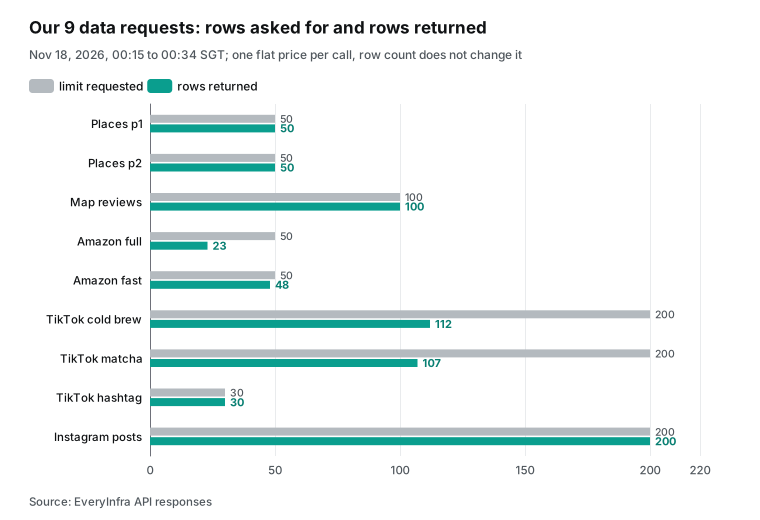
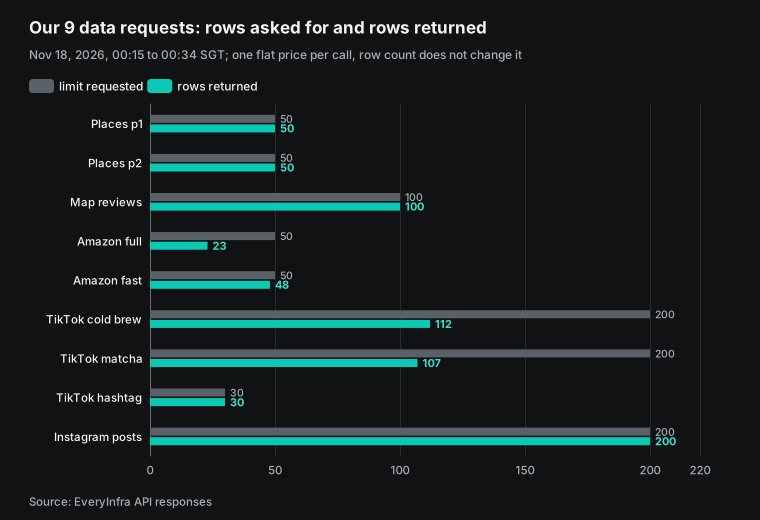
At 00:17 SGT we called amazon/search for "air fryer" with limit 50. It took 55.3 seconds and returned 23 products for $0.002236. That is $0.0972 per 1,000, our highest unit price of the night. We asked for 50 and got 23, so the per-call denominator was small.
Each row had 20 fields. Price was on all 23 rows, rating on 22 and brand on only 10. Prices ran from $39.99 to $219.95.
At 00:32 SGT we added "fast": true and searched again. It returned 48 products in 9.8 seconds, again for $0.002236. That is $0.0466 per 1,000. Fast mode has 12 fields per row and drops brand, seller, features and six other fields. 19 ASINs appeared in both runs. Together the two calls gave 71 rows for $0.004472, or $0.063 per 1,000.
| Metric | Full mode (00:17 SGT) | Fast mode (00:32 SGT) |
|---|---|---|
| Requested limit | 50 | 50 |
| Rows returned | 23 | 48 |
| Time | 55.3 s | 9.8 s |
| Fields per row | 20 | 12 |
| Charged | $0.002236 | $0.002236 |
| Per 1,000 rows | $0.0972 | $0.0466 |
The Apify Amazon Product Scraper charges per result. The prices are Free $5.00, Starter $4.00, Scale $3.50 and Business $3.00 per 1,000. That is the most expensive of the five Apify actors here. Bright Data's Amazon products scraper, collected by keyword, is $1.50 per record.
Bright Data's Amazon scraper docs show the endpoints. Its comparison with do-it-yourself scraping shows one Amazon record from September 6, 2026. That record had 94 top-level fields, including seller lists. Our search rows have 20 fields. So this job is really two jobs.
For the search list only (title, price, rating, rank), our 20-field rows at $0.0466 to $0.0972 are 15 to 32 times below Bright Data's 94-field records. These are not the same kind of record. For every field from each product page, compare our amazon/profile instead. It costs $0.001389 per call for one product, or $1.389 per 1,000. That is only 7% below Bright Data PAYG and above its $1.30 Scale overage. Our Bright Data pricing explainer works through that case.
Job 4: TikTok videos, up to 112 rows in one call
At 00:15 SGT we called tiktok/search for "cold brew" with content_type video and limit 200. It returned 112 rows in 88.8 seconds for $0.000556. At 00:32 SGT we searched "matcha latte" the same way and got 107 rows in 90.8 seconds. Neither call reached 200, and neither returned a page token. About a hundred rows was all that each keyword had at that moment.
At 00:24 SGT we also called tiktok/hashtag for #coldbrew. It returned 30 rows in 19.3 seconds, which is the per-call cap for that capability. The three calls returned 249 rows and 247 unique video IDs for $0.001668. That is $0.0067 per 1,000. The two searches alone come to $0.0051 and the hashtag call alone to $0.0185.
The 219 search rows were well filled. Views, likes, comments, shares, saves, music and author follower count were on all 219 rows. Hashtags were on 192 rows, and the country field was on none. In the cold brew set, the median view count was 168,250.
17 rows were marked as ads. Post dates ran from February 19, 2021 to November 17, 2026, because search sorts by relevance. For a trend report on the last seven days, filter by posted_at yourself.
The Apify TikTok Scraper is one of the most run actors in the Store, with 11,061,766 runs in total. The prices are Free $3.70, Starter $3.00, Scale $2.30 and Business $1.70 per 1,000. A date filter adds $0.0013 per result on Free, and each start adds $0.001. The same author's TikTok Data Extractor is cheaper, from $3.00 on Free to $1.00 on Business.
Bright Data's TikTok scraper docs say that discovery by keyword or hashtag runs async. Each post record is $1.50 per 1,000. Here, Bright Data PAYG is 2.47 times cheaper than Apify Free and 1.13 times cheaper than Business. Our $0.0067 is 224 times below Bright Data and 552 times below Apify Free. Our Apify TikTok scraper alternative post looks at TikTok alone.
Job 5: Instagram posts, 200 rows from one async request
At 00:18 SGT we submitted an async instagram/user_posts job for the natgeo account with limit 200. We had a 202 and a poll URL in 2.6 seconds. The submit charged $0.000556, and polling is free. The job returned 200 posts: 111 videos and 89 images. They were posted between September 11 and November 17, 2026.
Likes, comments, caption and image URL were on all 200 rows. View count, hashtags, location and top comments were empty on every row this time. The catalog field notes already say "some requests return only part of these fields". At 200 rows, the cost is $0.0028 per 1,000.
Apify has two related actors. The general Instagram Scraper costs $2.70 on Free to $1.50 on Business per 1,000. The dedicated Instagram Post Scraper is cheaper: Free $1.70, Starter $1.50, Scale $1.30 and Business $1.00. Post details add $0.001 per post on Free. That price version started on October 7, 2026.
Bright Data's Instagram Posts scraper is $1.50 per 1,000. Its Instagram scraper docs split profiles, posts, reels and comments into four datasets. Apify Post Scraper Free is 13% above Bright Data, and Starter is equal. Scale and Business are lower, at 0.87 and 0.67 times. Our $0.0028 is 536 times below Bright Data and 607 times below Apify Free. For field coverage, see our best Instagram scraper list.
Apify vs Bright Data, which is cheaper: a lookup by job and plan
This table puts the five jobs, four Apify plans and the Bright Data options together. Each ratio is the Apify tier price divided by the Bright Data PAYG price of $1.50. A ratio above 1 means Bright Data is cheaper.
| Job | Free | Starter | Scale | Business | Bright Data first 3 months (API60) | Cheaper of the two |
|---|---|---|---|---|---|---|
| Google Maps places | 2.67 | 2.00 | 1.33 | 1.00 | 0.60 | Bright Data; equal on Business |
| Google Maps reviews | 0.40 | 0.30 | 0.27 | 0.20 | 0.60 | Apify on every plan |
| Amazon products | 3.33 | 2.67 | 2.33 | 2.00 | 0.60 | Bright Data on every plan |
| TikTok videos | 2.47 | 2.00 | 1.53 | 1.13 | 0.60 | Bright Data on every plan |
| Instagram posts | 1.13 | 1.00 | 0.87 | 0.67 | 0.60 | Bright Data below Scale, Apify from Scale up |
Bright Data sells every platform at one price. Each Apify author prices their own actor: high for places, Amazon and TikTok, and low for reviews. A paid Apify plan lowers every actor at once. Bright Data's Scale plan at $499 only beats PAYG above 332,667 records per month.
Monthly bill: N places per month, the cheapest way to buy on each
A monthly cost is more than the unit price times volume. Apify has a plan fee as a floor. Bright Data subtracts 5,000 free records each month. EveryInfra charges only per call. This table uses Google Maps places and picks the cheapest way to buy on each service. EveryInfra uses our measured 50 rows per call.
| Places per month | Cheapest Apify plan | Apify monthly | Cheapest Bright Data option | Bright Data monthly | EveryInfra monthly |
|---|---|---|---|---|---|
| 1,000 | Free (inside $5) | 0 | Free tier | 0 | 0.03 |
| 10,000 | Starter | 30.00 | PAYG | 7.50 | 0.28 |
| 50,000 | Starter | 150.00 | PAYG | 67.50 | 1.39 |
| 100,000 | Scale | 200.00 | PAYG | 142.50 | 2.78 |
| 300,000 | Scale | 600.00 | PAYG | 442.50 | 8.34 |
| 1,000,000 | Business | 1,500.00 | Scale | 1,299.80 | 27.80 |
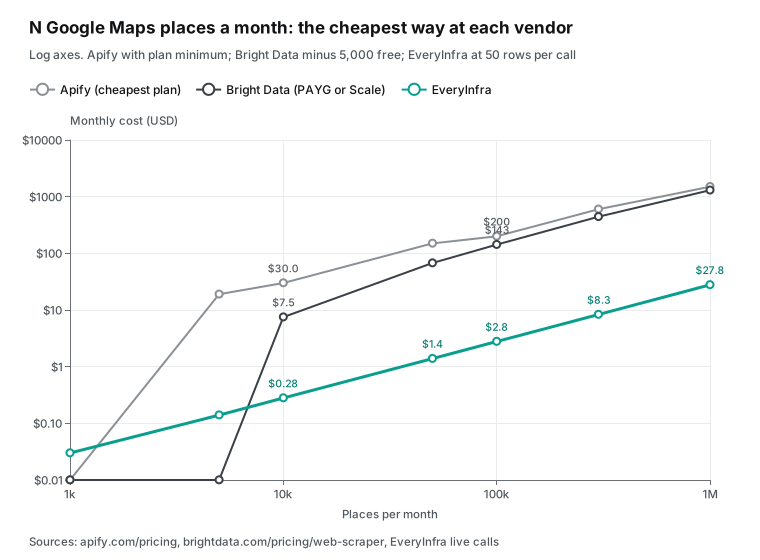
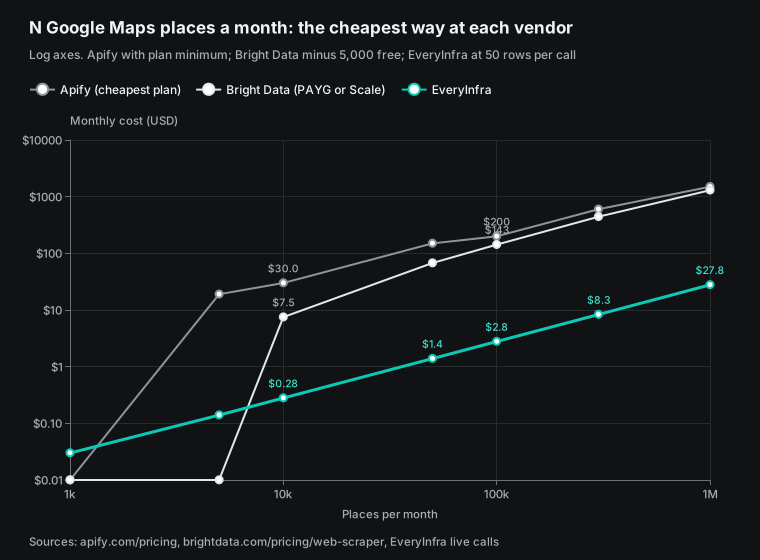
Up to 1,000 places a month, all three are almost free. From 5,000 places, Apify needs Starter at $19, while Bright Data is still free. At 100,000 places, Apify Scale is $200, Bright Data $142.50 and EveryInfra $2.78. At 1 million, Bright Data Scale is $1,299.80, Apify Business $1,500 and EveryInfra $27.80.
The EveryInfra line assumes that every call returns a full 50 rows. A narrow keyword with a dozen rows per page raises the unit price in proportion. Redo that column with your own average rows per call.
With several jobs together, the answer changes again. Take a team that needs 20,000 places, 100,000 map reviews, 50,000 TikTok videos and 50,000 Instagram posts a month. At Apify tier prices this is $330 on Starter and $260 on Scale. Business usage is only $195, but its fee is $999, so Scale at $260 is the cheapest Apify plan.
Bright Data PAYG, after 5,000 free records, is $322.50, and its Scale plan is $499. EveryInfra at our measured rates is $2.42. Reviews are half of the rows, and Apify is cheap on reviews. So in this mixed bill, Apify beats Bright Data.
Three team budgets: store reviews, Amazon keywords and TikTok monitoring
The monthly table covered places only. Here are three common teams, each priced over one month. Each service uses its cheapest way to buy. EveryInfra uses the rows per call we measured, not the request limit.
| Team and monthly job | Rows per month | Apify (cheapest plan) | Bright Data | EveryInfra |
|---|---|---|---|---|
| Review monitoring: latest 100 reviews for 50 stores | 5,000 | $3, inside the $5 Free allowance | $0, inside the free tier | $0.069 (50 calls) |
| Amazon seller: 200 keywords searched daily, 35.5 rows per call | 213,000 | $745.50 on Scale | $312 PAYG | $13.42 (6,000 calls) |
| Brand team: 30 TikTok keywords searched daily, about 110 rows per call | 99,000 | $227.70 on Scale | $141 PAYG | $0.50 (900 calls) |
At the store-review volume, none of the three costs real money, so pick by fields and tools. For the Amazon seller, Apify Business usage would be $639, but the fee is $999. Bright Data stays below the 333,000-record point where Scale pays off. Product detail pages are a separate cost on every service, and there our price is close to Bright Data.
Free allowance: how many rows each one buys
Free allowances let you check fields and success rates before you pay. Apify gives $5 per month at Free prices and stops the account when it runs out. Bright Data gives 5,000 credits per month, one per record. EveryInfra has no automatic grant. You star two GitHub repositories and get a $1 trial credit for 24 hours. The pricing page says this is "about 720 data calls".
| Job | Apify $5 per month | Bright Data 5,000 credits per month | EveryInfra $1 trial (at our measured rates) |
|---|---|---|---|
| Google Maps places | 1,250 | 5,000 | 35,971 |
| Google Maps reviews | 8,333 | 5,000 | 71,942 |
| Amazon products | 1,000 | 5,000 | 15,873 |
| TikTok videos | 1,351 | 5,000 | 149,253 |
| Instagram posts | 2,941 | 5,000 | 357,142 |
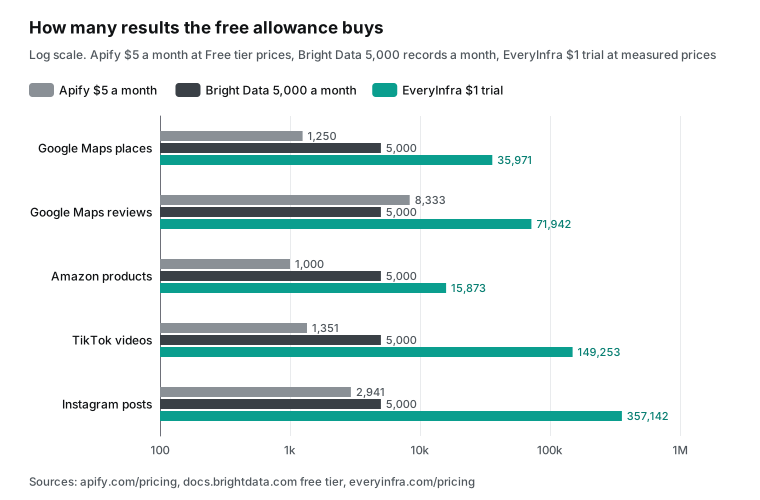
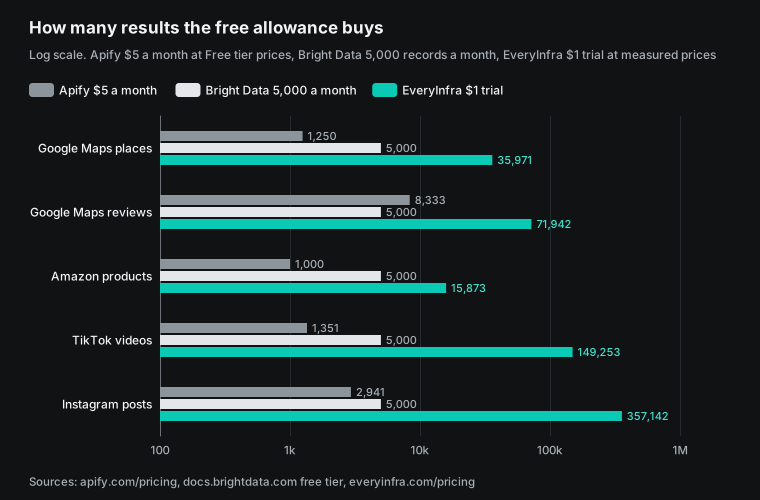
Our $1 is a one-time 24-hour trial for one focused test, not for steady small use. The EveryInfra column is a ceiling. For 357,142 Instagram posts, you would need 1,786 requests. At the 10 requests per minute of our test key, that takes about 3 hours.
Failed and empty results: who charges for what
The two per-row vendors write their failure rules in different places. Bright Data's pricing page says you pay only for successfully delivered data. Failed deliveries are free. Its error codes page says a failed input gives an error record with an error_code such as dead_page. That record is free. An empty result [] is not an error and is also free.
Its limits page adds one more rule. 25 or more 429 responses within 5 minutes block that IP for one hour.
On Apify, the rule depends on how the actor emits events. Writing a result triggers a charge, and a start event charges at the start. The pay per event developer docs describe two automatic events: apify-actor-start and apify-default-dataset-item. If a run fails halfway, the results already written and the start fee still count.
You can set a maximum cost per run, and the actor stops when it reaches it. Actors on pay per usage charge for compute, proxy and storage. The Apify pricing page says more retries mean higher cost.
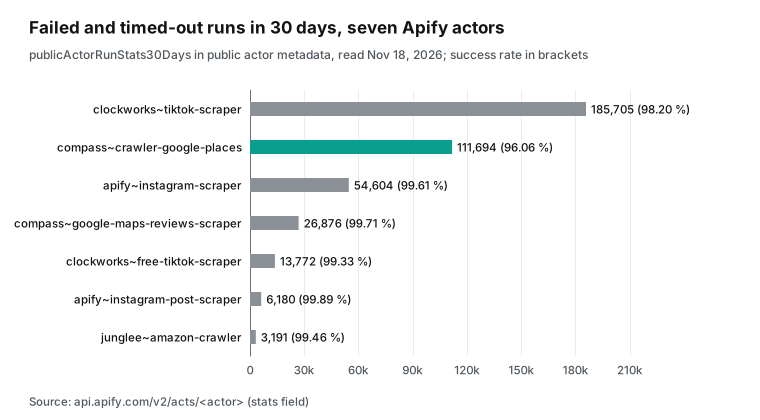
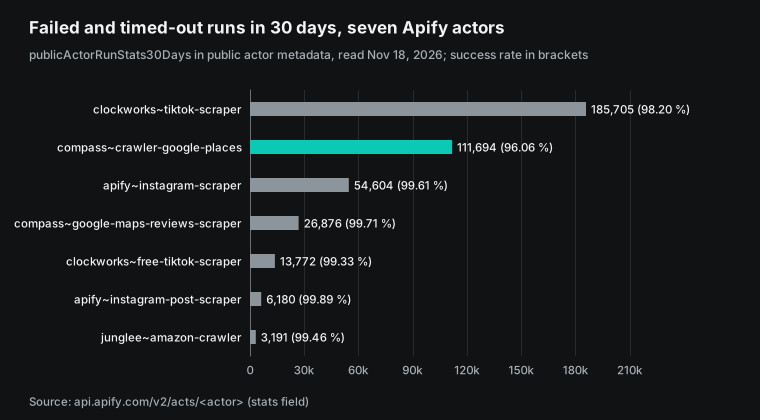
Apify publishes each actor's run results for the last 30 days in its metadata. This gives an outside view of success rates. These counts are failed plus timed-out runs and leave out runs that users aborted. TikTok Scraper had 185,705 such runs, a 98.20% success rate. Google Maps Scraper had 111,694, or 96.06%. The general Instagram Scraper had 54,604, and the reviews scraper 26,876. The metadata does not split user input errors from platform blocks.
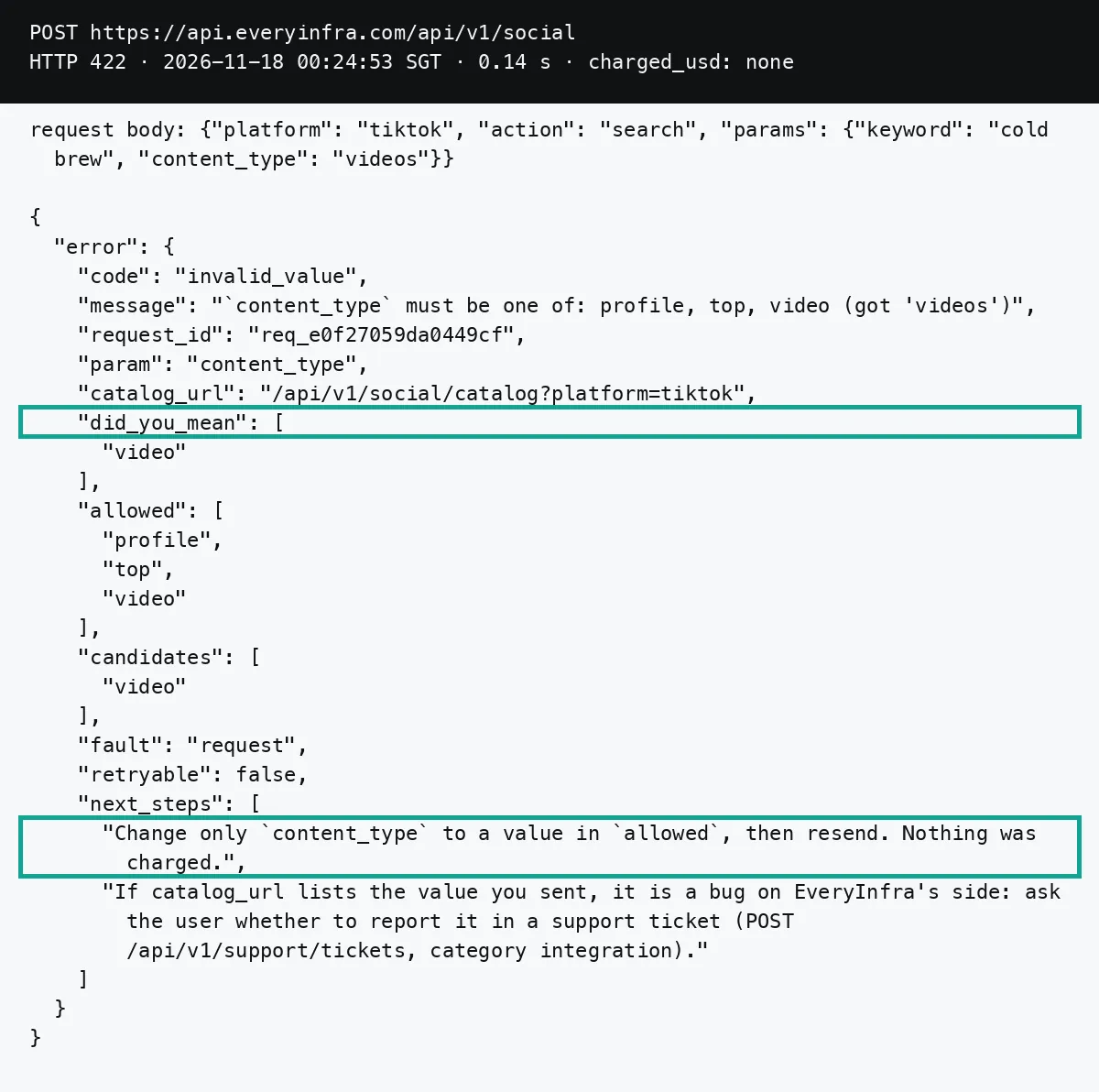
At 00:24 SGT we sent two requests that were wrong on purpose. One called tiktok/search with no key. It got a 401 missing_key in 0.14 seconds, with the text "Nothing was charged". The other set content_type to "videos". It got a 422 invalid_value that listed the allowed values and a did_you_mean of "video". Both had an empty charged_usd.
For slow requests, we hold the charge first. We return it under the same charge ID when the call fails or comes back empty. None of our 16 requests hit that case.
| Item | Apify | Bright Data | EveryInfra |
|---|---|---|---|
| Billing unit | Each event (result, start, add-on) or compute | Each successfully delivered record | Each request (fixed price, any row count) |
| Failures | Results already written and start fee are charged | Failed records are free | Failures are free; held charges are returned |
| Empty result | No result events, start fee still charged | Free | Free |
| Bad parameter | Depends on the actor's input checks | Request-level 4xx, no job starts | 422, free, with allowed values and a suggestion |
| Monthly fee or minimum | Free / $19 / $199 / $999 plans | No fee on PAYG; Scale $499 per month | No monthly fee; minimum top-up $10 |
| Free allowance | $5 per month | 5,000 credits per month | $1 trial (star two repos, 24 hours) |
| Balance expiry | Plan usage expires each month | Free credits expire each month; deposit match bonus within 90 days | Top-up balance does not expire |
| MCP | mcp.apify.com | mcp.brightdata.com, 5,000 free requests per month | api.everyinfra.com/mcp |
Wait time: sync, async and run length
Besides price, wait time decides whether you can use the data inside an interactive tool. Bright Data's sync vs async page says a sync /scrape request waits at most one minute. After that, it becomes an async job and returns 202 with a snapshot_id. Discovery by keyword is always async, and an account can run up to 5,000 jobs.
Each Apify actor call is a full run that first gets a container. A Free account can run 5 at once, and Starter can run 32. Through MCP, the call-actor tool waits at most 45 seconds and then returns only the run ID.
| Call (this test) | Time | Rows |
|---|---|---|
| Place search | 9.5 s | 50 |
| Map reviews | 7.9 s | 100 |
| Amazon fast mode / full mode | 9.8 s / 55.3 s | 48 / 23 |
| TikTok hashtag | 19.3 s | 30 |
| TikTok keyword search | 88.8 s and 90.8 s | 112 and 107 |
| Instagram posts (async submit) | 2.6 s to a 202 | 200 |
A TikTok search takes about a minute and a half, which is long inside a chat. Any capability accepts "mode":"async" in the body. You submit, then fetch from poll_url, and polling is free. All three services turn slow work into a job. They differ in unit price and failure rules.
Use from AI tools: all three offer MCP
All three offer a remote MCP server. Apify's MCP docs give the address https://mcp.apify.com with OAuth sign-in. By default it loads tools to search actors, run actors and read docs. You can add tools= to the URL to load only a few actors. The call-actor tool returns the run status and storage IDs, and results need another call.
Bright Data's MCP repository lists 30 tools and 5,000 free requests per month. After that, search and scrape cost $1.50 per 1,000, and the remote browser costs $8 per GB. For structured data, you call search_scrapers and then run_scraper.
EveryInfra's remote MCP is https://api.everyinfra.com/mcp. On November 18 we read 12 tools in its tool list. everyinfra_call_api gets data and everyinfra_get_job fetches slow jobs. Setup is on the MCP server page.
{
  "mcpServers": {
    "everyinfra": {
      "url": "https://api.everyinfra.com/mcp",
      "headers": { "Authorization": "Bearer ${EVERYINFRA_API_KEY}" }
    }
  }
}
One model call can bring back thousands of rows, and a per-row bill follows the rows. A thread on r/marketinteltools tells of a user whose normal 90-day bill was $11.86. One afternoon, a dataset query with no cap matched 682,000 records. The bill passed $1,000, and Bright Data later refunded it in full. With a per-call API, one more model call costs one more call, so the bill is easy to predict.
Spend caps
Apify lets you set a maximum cost per run, and pay-per-event actors must stop there. The Google Maps Scraper sets the lowest cap at $0.50. Bright Data's billing docs describe a prepaid wallet with automatic top-up. The free tier stops when you use it up. EveryInfra is prepaid, and one request returns at most the catalog max_limit rows. With any per-row service, set a fixed row cap per call in your prompt or tool settings.
Three related YouTube videos: the prices they quote and where the docs disagree
At 00:15 SGT we searched YouTube for "apify vs brightdata" with EveryInfra's youtube/search. It returned 10 results for $0.000778. None of the 10 was a direct one-to-one comparison. For the three closest videos, we pulled transcripts with youtube/transcript at $0.000556 each.
| Video (upload date) | What it shows | What it leaves out |
|---|---|---|
| Apify vs 6 Rivals (November 7, 2026) | Apify plans $0 / $19 / $199 / $999; Google Maps "from $1.50 per 1,000"; Bright Data 5,000 free, $1.50 PAYG, Scale $499, pay only for success | No per-job price per 1,000; no mention that Apify Free is $4 for places |
| Build vs Buy Web Data (November 12, 2026) | Bright Data datasets at $2.50 per 1,000 with a $250 minimum; datasets win above about 6 MB of proxy traffic per record | No live API price, no Apify |
| A three-way scraping API comparison (June 18, 2026) | Bright Data bills per GB, per request and per record, so "the bill is hard to predict" | Says the free tier needs a credit card, which Bright Data's docs contradict |
We also pulled comments on the third video with youtube/comments and got only 2. So the pain points here come mostly from transcripts and forums.
Forum threads: bills and complaints
A review on r/automation of several scraping tools used an Apify Store YouTube actor. The author hit four problems. The max item setting did not hold, and he paid for over a thousand extra items with no refund. He also got stale data, and the same settings gave different results each time. He called Bright Data stable and low in errors, but too expensive for individual users.
The r/marketinteltools review adds two points. Since July 2026, new Bright Data residential proxy accounts need company verification. Small customers also say their unit price is higher than what large customers pay. These are single-user reports, so test them yourself before you choose.
When Apify is the better fit
Apify's strength is range and control. Its November 10, 2026 press release says the Store has over 100,000 actors. Runs reached 267 million per week in October, five times the level at the end of 2025. For a niche site, someone in the Store often has an actor already. You can also write and deploy your own.
Google Maps reviews on Business are $0.30 per 1,000, one fifth of Bright Data. Some teams want a chain of steps after scraping, such as translate, dedupe and write to a sheet. Apify's scheduler, webhooks and dataset storage keep that chain on one platform. Our market page lists what we cover. For a platform we do not cover, Apify is more likely to have it.
When Bright Data is the better fit
Bright Data's strengths are one price for everything, deep records and a proxy network. Its Web Scraper API library has over a thousand ready scrapers at one $1.50 price, so budgets are easy. One Amazon product record has 94 fields, which suits teams that need full detail. It won a favorable ruling in Meta v. Bright Data. The docket shows the case terminated on February 26, 2024.
For teams above 330,000 records a month, Bright Data Scale at $1.30 per 1,000 beats the matching Apify Business prices. Bright Data also sells bulk historical datasets. 100,000 records cost $250 one-time, or 80% less with a monthly refresh. For a few million historical records at once, a dataset fits better than live scraping. We only do live data calls and do not sell bulk datasets.
When EveryInfra is the better fit
EveryInfra's low unit price depends on each request returning many rows. Examples are 200 Instagram posts, about 100 TikTok results, 100 map reviews and 50 places. Detail calls that return one row each cost $0.556 to $1.389 per 1,000. That is close to Bright Data's $1.50, and Bright Data Scale can be cheaper.
Failures are free, balance does not expire and there is no monthly fee. This suits teams whose volume goes up and down. Our field names differ from both vendors, so switching needs a new field mapping. Our test of Apify against another web scraping API compares web search and crawling. Our Bright Data alternatives post compares six services.
Field comparison: what each one returns for the same job
| Job | EveryInfra fields in this test (rows / fields per row) | Apify actor public notes | Bright Data public notes |
|---|---|---|---|
| Google Maps places | 100 rows; place ID, coordinates, postal code, category on all; website 95, phone 77, description 37 | Place plus optional details, contacts, reviews, images (each an add-on event) | Google Maps full information record, by place ID or area discovery |
| Google Maps reviews | 100 rows; rating, text (65 rows), author review count, Local Guide flag, images (15 rows) | One event per review | Google Maps reviews record |
| Amazon products | Full mode 23 rows × 20 fields; fast mode 48 rows × 12 fields | One event per result; seller offers extra | 94 top-level fields (2026-09-06 sample) |
| TikTok videos | 219 rows; views, likes, comments, shares, saves, music on all; hashtags 192; country 0 | One event per result; date filter, comments, downloads extra | TikTok Posts record; keyword and hashtag discovery async |
| Instagram posts | 200 rows; likes, comments, caption, image on all; video URL 111; views 0 | One event per post; details extra | Instagram Posts record |
Each cell is a vendor's own public statement or our own test. The three services use different field names, meanings and fetch times. Do not use one vendor's results as a direct replacement for another's. When you merge, dedupe on the platform's own ID, such as place_id or the ASIN. Our two place pages had 6 repeats. On the per-row vendors, each repeated row costs money again.
Switching from Apify or Bright Data: the code you change
The first change is the call pattern. On Apify you start a run, wait for it to finish, then read the dataset. On Bright Data, /trigger returns a snapshot_id, and you poll or wait for a webhook. Most of our capabilities return in one sync call. Slow ones return 202 with a poll_url.
The second change is paging. Apify and Bright Data page inside one job and charge per row. We charge one call per page, and you follow next_page_token. The third change is field names. For example, our review count is review_count, and the rating scale is in rating_scale. This Python snippet calculates the price per 1,000 rows from the real row count:
import os, requests
r = requests.post("https://api.everyinfra.com/api/v1/social",
    headers={"Authorization": f"Bearer {os.environ['EVERYINFRA_API_KEY']}"},
    json={"platform": "google_maps_reviews", "action": "reviews",
          "params": {"url": PLACE_URL, "limit": 100}}, timeout=120).json()
rows = r.get("results") or []
usd = (r.get("billing") or {}).get("charged_usd") or 0
print(len(rows), usd, round(usd / max(len(rows), 1) * 1000, 4), "USD per 1,000 rows")
Changes in the last 30 days
- November 9, 2026: someone used a stolen credential to reach some internal Apify systems, which Apify found on November 11, 2026.
- Apify's status page incident log says it told affected users, rotated secrets and revoked some OAuth connections.
- November 10, 2026: Apify made Server Actors generally available and reported 57,000 Claude plugin installs by October 31, 2026.
- November 12, 2026: Bright Data posted a guide to its CLI and scheduled monitoring with Claude Code.
- November 16, 2026 and November 17, 2026: all seven Apify actors used here show updated metadata.
- November 18, 2026: the Bright Data pricing page still shows the API60 code for 60% off for three months.
For readers, three actions follow. If you keep an Apify token or OAuth link, reset it as the notice says. Read Apify actor prices again each month, because they change per actor. In a small team's first three months, Bright Data's real unit price is $0.60.
Compliance limits
All three collect data from public pages. Reviews and posts from EU users contain personal data and fall under the GDPR. We leave out personal author names in this article. Apify's terms of use make users responsible for what they scrape. Bright Data's win in the Meta case covered public data that is visible without a login. This article compares prices and billing only and is not legal advice.
Credentials are part of compliance too. All three use a long-lived API token. Bright Data's remote MCP address even puts the token in a URL parameter. If that URL lands in a shared file or a screenshot, the account goes with it. Issue one token per project and keep it in environment variables.
Get started: check the numbers with your own sample
- Open the quickstart and claim the $1 trial credit.
- Run one call with your own keyword on the Google Maps reviews page or Amazon page.
- Try the TikTok page or Instagram page the same way, and note rows and
charged_usd. - Use the Python snippet above to get the price per 1,000.
- Compare that price with your Apify run bill and your Bright Data record count.
FAQ
Apify or Bright Data, which is cheaper? (Source: Google autocomplete "apify or bright data") Check the lookup table above. Bright Data sells every platform at one price. Each Apify author prices their own actor, high for popular platforms and low for light data such as reviews. So for places, Amazon or TikTok alone, pick Bright Data. For map reviews alone, pick Apify. For Instagram posts, it depends on your Apify plan. In a mixed workload, more reviews tilt the bill toward Apify.
What does Reddit say about Bright Data vs Apify? (Source: Google autocomplete "bright data vs apify reddit") An r/automation review calls Bright Data stable but too expensive for individuals. It says Apify once ignored a limit and charged for extra items with no refund. An r/marketinteltools review mentions one uncapped Bright Data query with a bill above $1,000. Bright Data later refunded it in full.
Does the Bright Data free tier need a credit card? (Source: the transcript of a three-way comparison video on YouTube) The video says it does. Bright Data's free tier docs and its MCP repository both say that no credit card is needed. You get 5,000 credits per month, and they reset on the first. Go by the docs.
Do I pay when an Apify run fails? (Source: the r/automation complaint about charges beyond the limit) Yes, for results written before the failure. Pay-per-event actors also keep the start fee. On pay-per-usage actors, the compute and proxy for retries are charged. You can set a maximum cost per run. Bright Data and EveryInfra do not charge for failures.
Apify vs Bright Data, which one works with MCP and Claude? (Source: Google autocomplete "apify vs brightdata") Both do. Apify is https://mcp.apify.com with OAuth. Bright Data is https://mcp.brightdata.com/mcp?token=… with 5,000 free requests per month. EveryInfra is https://api.everyinfra.com/mcp. The difference is billing, because the first two charge per row or per request.
Are Bright Data datasets cheaper than the Web Scraper API? (Source: the YouTube video "Build vs Buy Web Data: Bright Data Proxies vs Dataset Marketplace") A one-time purchase of 100,000 records is $250, or $2.50 per 1,000. That is more than the $1.50 API rate. A monthly refresh saves 80%, about $0.50 per 1,000, with a monthly minimum. Choose the API for fresh data and datasets for large historical pulls.
References
- Apify pricing, Apify, read 2026-11-18, https://apify.com/pricing
- Actors in Store (pricing models and Store discounts), Apify docs, read 2026-11-18, https://docs.apify.com/platform/actors/running/actors-in-store
- Get Actor API, Apify docs, read 2026-11-18, https://docs.apify.com/api/v2/act-get
- Pay-per-event pricing model, Apify docs, read 2026-11-18, https://docs.apify.com/platform/actors/publishing/monetize/pay-per-event
- Actor usage and resources, Apify docs, read 2026-11-18, https://docs.apify.com/platform/actors/running/usage-and-resources
- Compute units, Apify docs, read 2026-11-18, https://docs.apify.com/platform/actors/running/usage-and-resources/compute-units
- Google Maps Scraper is going to pay-per-event pricing, Apify help center, 2025-03-18, https://help.apify.com/en/articles/10774732-google-maps-scraper-is-going-to-pay-per-event-pricing
- Apify MCP server, Apify docs, read 2026-11-18, https://docs.apify.com/platform/integrations/mcp
- apify-mcp-server repository, GitHub, read 2026-11-18, https://github.com/apify/apify-mcp-server
- Google Maps Scraper, Apify Store, read 2026-11-18, https://apify.com/compass/crawler-google-places
- Google Maps Reviews Scraper, Apify Store, read 2026-11-18, https://apify.com/compass/google-maps-reviews-scraper
- Amazon Product Scraper, Apify Store, read 2026-11-18, https://apify.com/junglee/amazon-crawler
- TikTok Scraper, Apify Store, read 2026-11-18, https://apify.com/clockworks/tiktok-scraper
- Instagram Post Scraper, Apify Store, read 2026-11-18, https://apify.com/apify/instagram-post-scraper
- Instagram Scraper, Apify Store, read 2026-11-18, https://apify.com/apify/instagram-scraper
- Apify status page incident log (security incident), Apify, 2026-11-11 to 11-12, https://status.apify.com/incidents/
- Apify Unveils New AI Agent Capabilities and Server Actors, GlobeNewswire, 2026-11-10, https://www.globenewswire.com/news-release/2026/11/10/3399579/0/en/apify-unveils-new-ai-agent-capabilities-and-server-actors-to-support-growing-demand.html
- Apify terms of use, Apify, read 2026-11-18, https://apify.com/terms-of-use
- Apify security, Apify docs, read 2026-11-18, https://docs.apify.com/security
- Web Scraper API pricing, Bright Data, read 2026-11-18, https://brightdata.com/pricing/web-scraper
- Datasets pricing, Bright Data, read 2026-11-18, https://brightdata.com/pricing/datasets
- MCP server pricing, Bright Data, read 2026-11-18, https://brightdata.com/pricing/mcp-server
- Free tier, Bright Data docs, read 2026-11-18, https://docs.brightdata.com/general/account/billing-and-pricing/free-tier
- Billing, Bright Data docs, read 2026-11-18, https://docs.brightdata.com/general/account/billing-and-pricing/billing
- Promo codes, Bright Data docs, read 2026-11-18, https://docs.brightdata.com/general/account/billing-and-pricing/promo-codes
- Scraper API vs DIY scraping, Bright Data docs, read 2026-11-18, https://docs.brightdata.com/concepts/web-scraper-api-vs-diy
- Scraper API error codes, Bright Data docs, read 2026-11-18, https://docs.brightdata.com/products/scrapers/error-codes
- Scraper API limits, Bright Data docs, read 2026-11-18, https://docs.brightdata.com/products/scrapers/limits
- Understanding sync vs. async requests, Bright Data docs, read 2026-11-18, https://docs.brightdata.com/concepts/sync-vs-async
- Google Scraper API, Bright Data docs, read 2026-11-18, https://docs.brightdata.com/products/scrapers/google/introduction
- Amazon Scraper API endpoints, Bright Data docs, read 2026-11-18, https://docs.brightdata.com/products/scrapers/amazon/send-first-request
- TikTok Scraper API, Bright Data docs, read 2026-11-18, https://docs.brightdata.com/products/scrapers/tiktok/introduction
- Instagram Scraper API, Bright Data docs, read 2026-11-18, https://docs.brightdata.com/products/scrapers/instagram/introduction
- Bright Data MCP FAQs, Bright Data docs, read 2026-11-18, https://docs.brightdata.com/products/mcp-server/faqs
- brightdata-mcp repository, GitHub, read 2026-11-18, https://github.com/brightdata/brightdata-mcp
- Meta Platforms, Inc. v. Bright Data Ltd. docket, CourtListener, filed 2023-01-06, terminated 2024-02-26, https://www.courtlistener.com/docket/66706470/meta-platforms-inc-v-bright-data-ltd/
- Introduction to the Model Context Protocol, modelcontextprotocol.io, read 2026-11-18, https://modelcontextprotocol.io/docs/getting-started/intro
- General Data Protection Regulation, EUR-Lex, 2016-04-27, https://eur-lex.europa.eu/eli/reg/2016/679/oj
- EveryInfra data catalog, EveryInfra, read 2026-11-18, https://api.everyinfra.com/api/v1/social/catalog
- EveryInfra catalog (TikTok), EveryInfra, read 2026-11-18, https://api.everyinfra.com/api/v1/social/catalog?platform=tiktok
- EveryInfra catalog (Google Maps), EveryInfra, read 2026-11-18, https://api.everyinfra.com/api/v1/social/catalog?platform=google_maps_reviews
- EveryInfra catalog (Amazon), EveryInfra, read 2026-11-18, https://api.everyinfra.com/api/v1/social/catalog?platform=amazon
- EveryInfra catalog (Instagram), EveryInfra, read 2026-11-18, https://api.everyinfra.com/api/v1/social/catalog?platform=instagram
- Review thread on scraping tools, Reddit r/automation, read 2026-11-18, https://www.reddit.com/r/automation/comments/1sgmbyq/reviews_after_getting_into_web_scrape_tools_apify/
- What's your opinion about Bright Data?, Reddit r/marketinteltools, read 2026-11-18, https://www.reddit.com/r/marketinteltools/comments/1w63fzc/whats_your_opinion_about_bright_data/
- Apify vs 6 Rivals: Best Web Scraping Tool in 2026?, YouTube, 2026-11-07, https://www.youtube.com/watch?v=uAZuLOyFJS8
- Build vs Buy Web Data: Bright Data Proxies vs Dataset Marketplace, YouTube, 2026-11-12, https://www.youtube.com/watch?v=G50K0cmV5r0
- Three-way comparison video of Bright Data and two other scraping APIs, YouTube, 2026-06-18, https://www.youtube.com/watch?v=mi7cYug7AP4
Reference BL-182